

DNA – Destinazione Nicotera Autentica
Outdoor
Site: Lungomare di Nicotera, Vibo Valentia, Italy
Year: 2025
Design Competition
In collaboration with b.there studio, Martina Pellacini, Ribamar Poletti
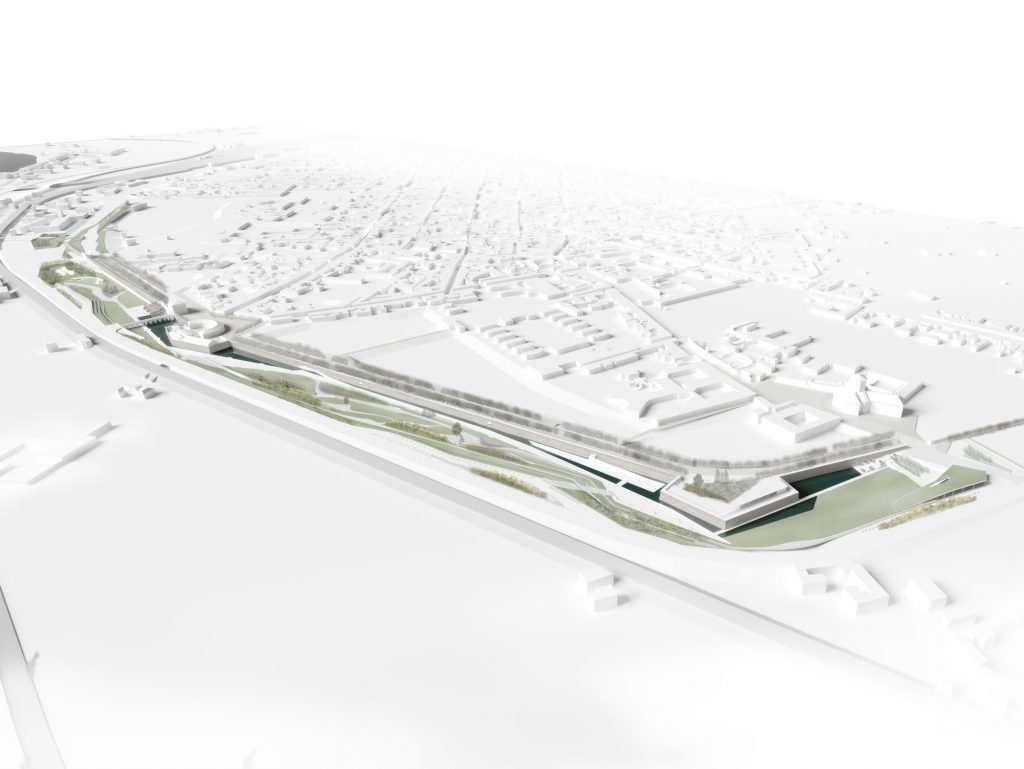
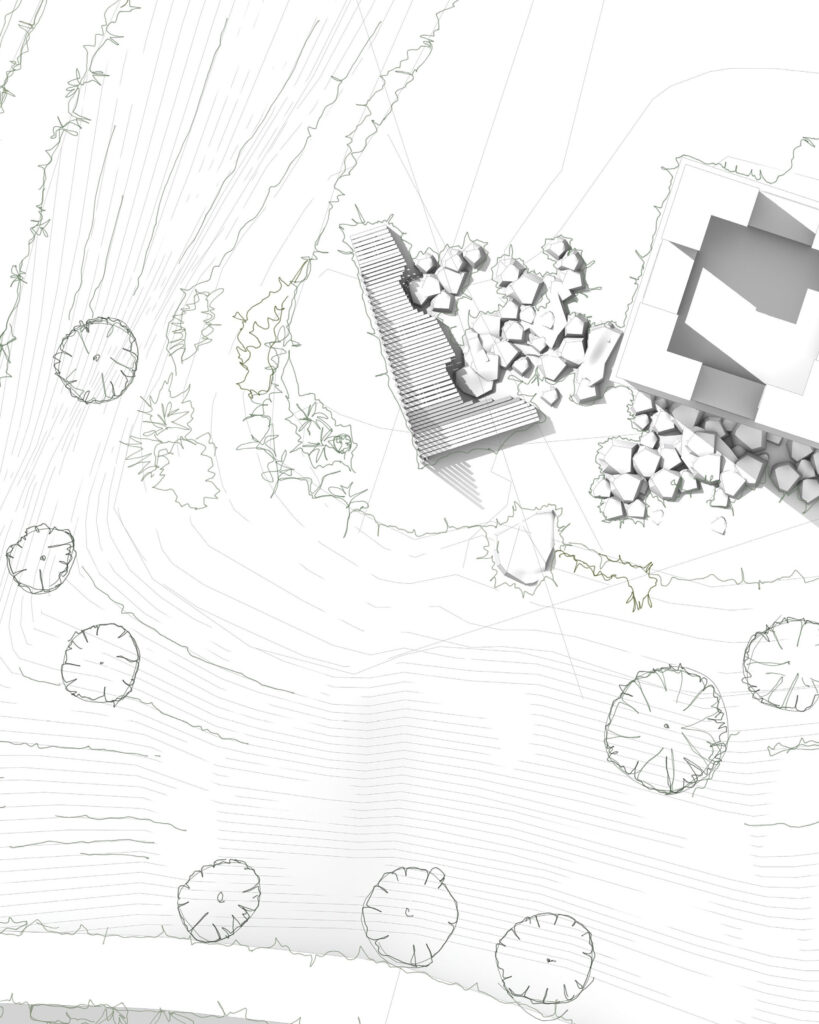
DNA – Destinazione Nicotera Autentica is a proposal for the regeneration of the Nicotera waterfront, conceived as a continuous civic infrastructure rather than a sequence of isolated interventions.
The project addresses a coastal edge lacking a clear spatial structure, aiming to construct a unified vision of the waterfront as a public space that integrates movement, permanence, landscape, and collective life.


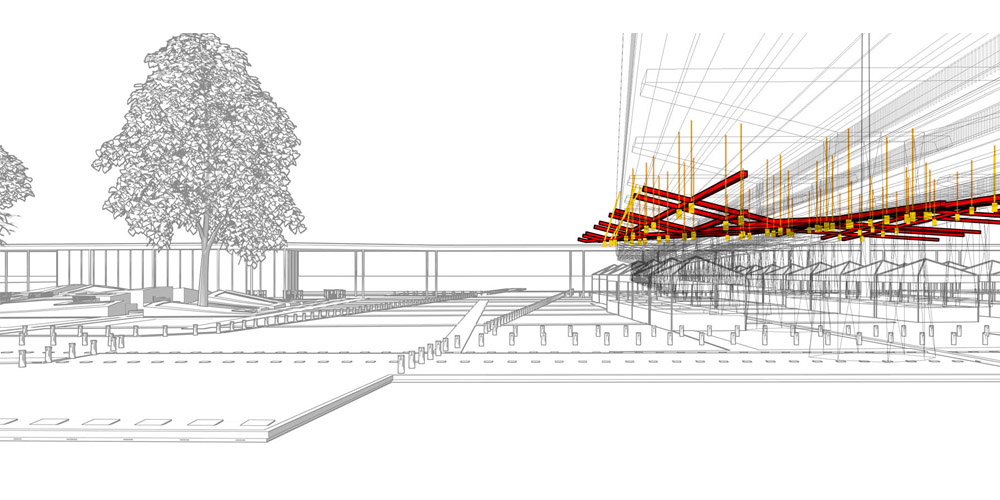
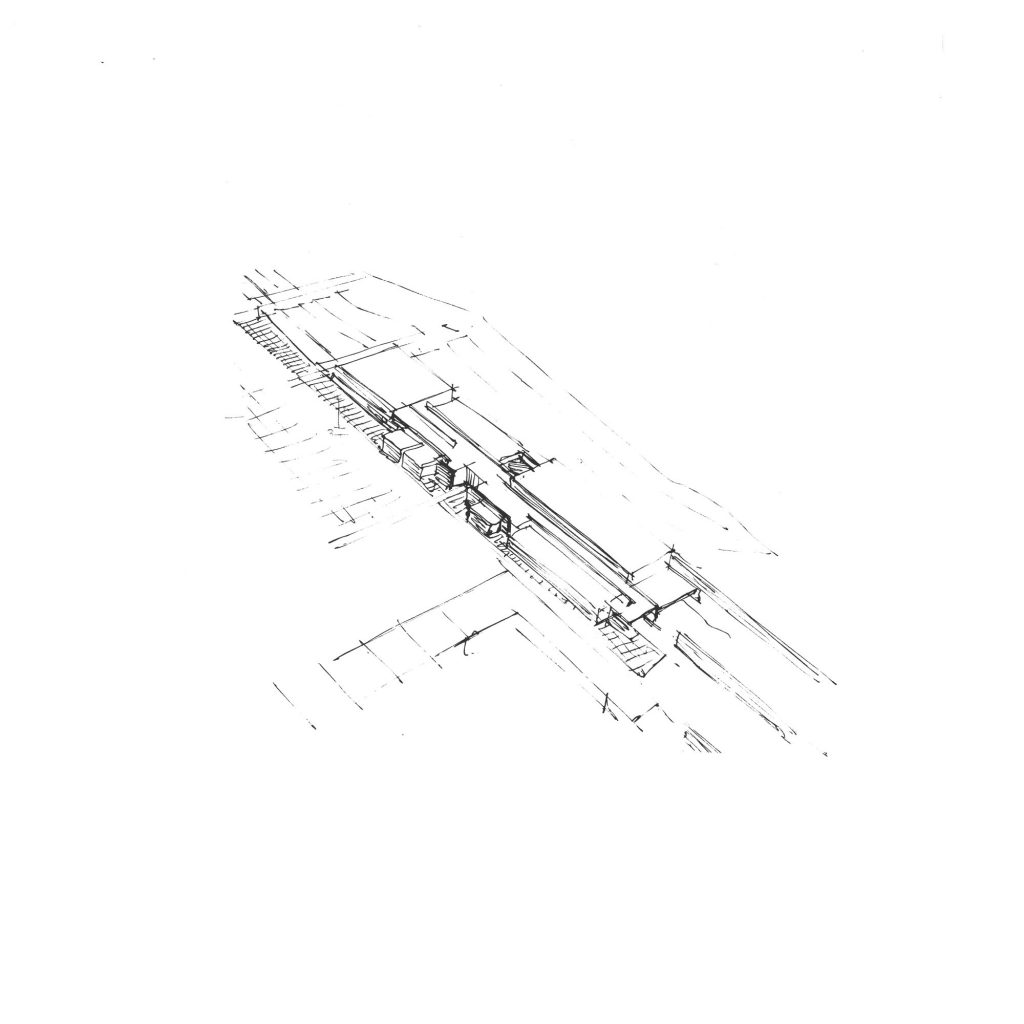
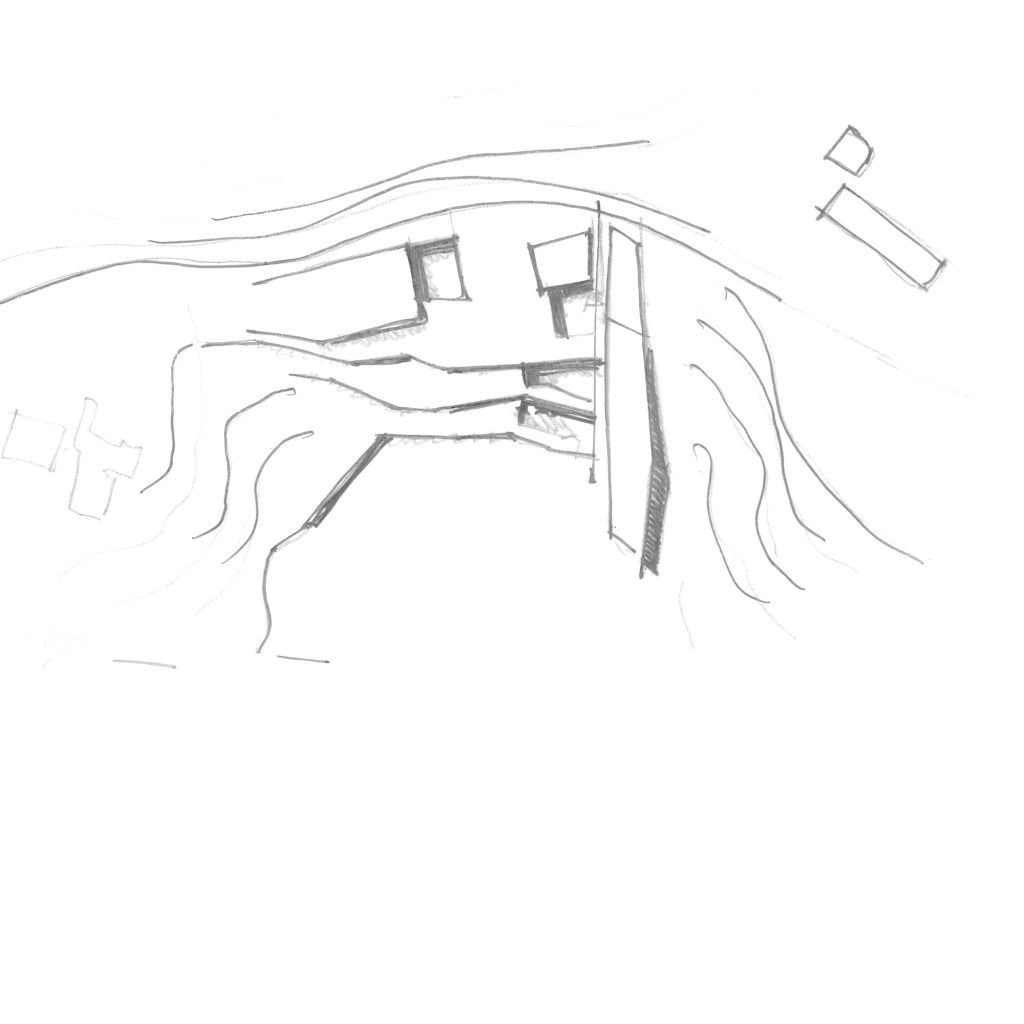
The competition brief required a comprehensive plan-based strategy and the definition of specific nodal points along the coastal axis. The proposal responds by treating the ground as the primary design matrix, focusing on spatial continuity and avoiding object-based solutions.
A founding decision of the project is the full preservation of the existing trees, understood not as a constraint but as an active resource. The vegetation becomes a structural component of the design, around which paths, resting areas, and variations in section are organized, transforming a fragmented condition into a coherent system.
The project introduces a strong reference figure, summarized in the name DNA, interpreted as a chain of intertwined paths that separate, intersect, and recombine along the waterfront. This continuous system allows the hybridization of movement and permanence, blurring the distinction between walking paths, slow mobility, and spaces for staying. Movement slows down, deviates, and expands; permanence becomes integrated into the flow as part of the same spatial infrastructure.
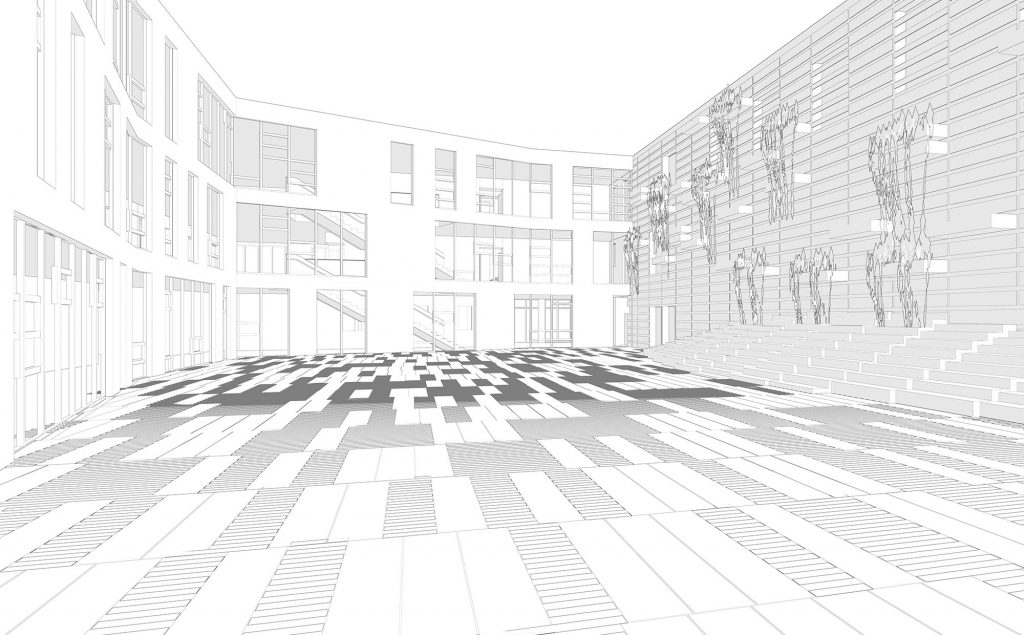
Along the linear system, four specific points open toward the sea while maintaining the same underlying logic, generating distinct spatial conditions. These spaces are not conceived exclusively for seasonal tourism, but as public places capable of hosting different uses throughout the year, including meeting, play, events, markets, and contemplation.
Within this framework, the green system plays a dominant role. It is not conceived as a barrier or an accessory element, but as an integral part of the spatial infrastructure. Vegetation defines the character of the places, providing shade, microclimatic comfort, and perceptual quality, and transforming the waterfront into an inhabitable, traversable, and lived environment.
DNA interprets the waterfront as a continuous device capable of giving form to a public space previously lacking clear references, restoring the coast to a central role in the everyday life of the community and in the relationship between the city and the sea.
Related projects