
Matteo Fraschini
Architetto Ph.D
architecture, landscape, installation, research
Works
- All
- Architecture
- Forms
- Installations
- Interiors
- Landscape
- Renovation
- Research
- Urban Design

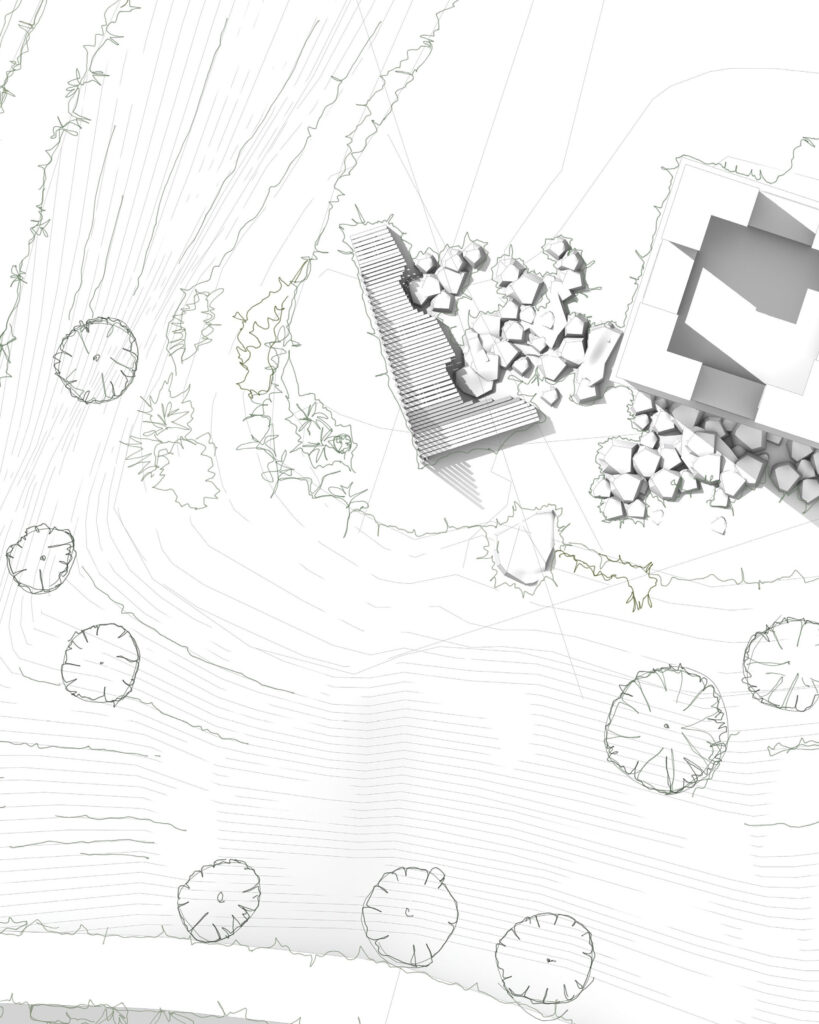


Euroflora 2025 – Genova
Installation – Landscape – Design – Competition – 1st Price – Venice Biennale 2025


Palasport, Competition Concept – Euroflora 2025 – Genova
Installation – Landscape – Design – Competition – 1st Price
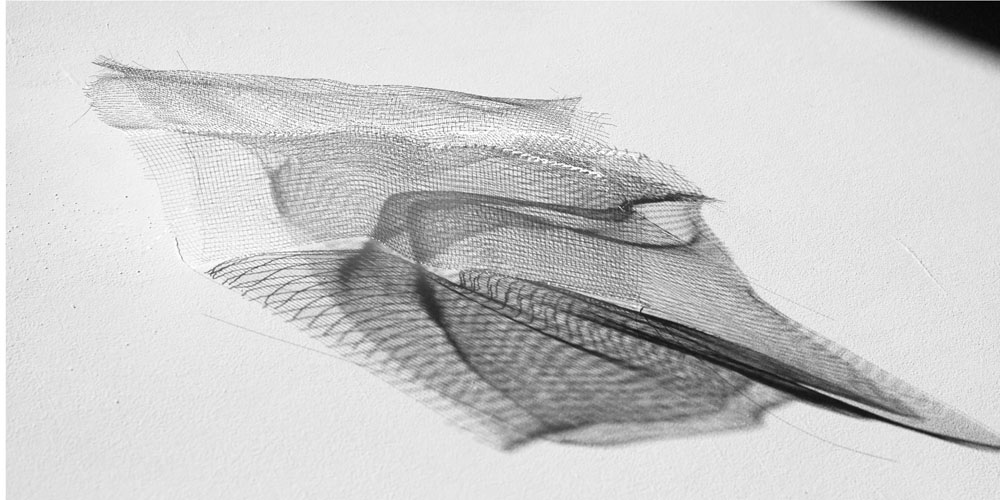


Euroflora 2025 – Genova – Floating Flowers and Other Settings
Installation – Landscape – Design Competition – 1st Price – Venice Biennale 2025


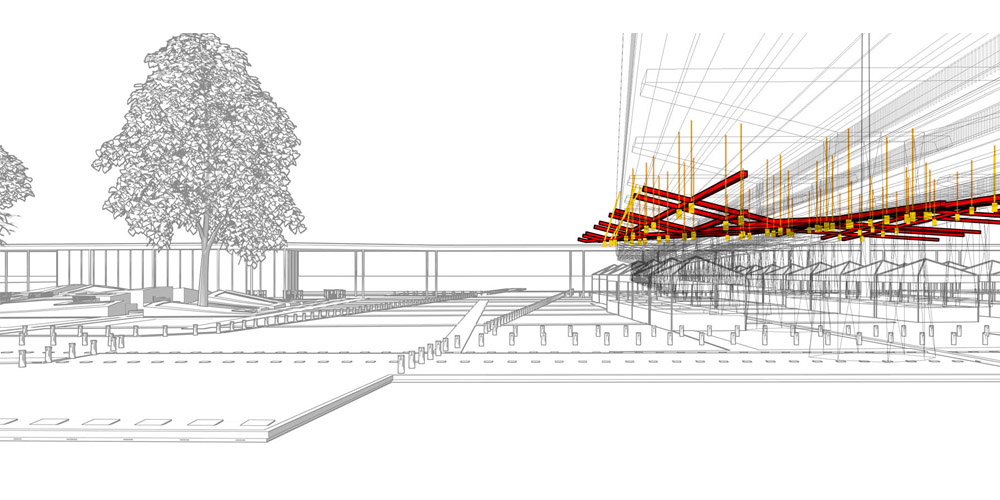
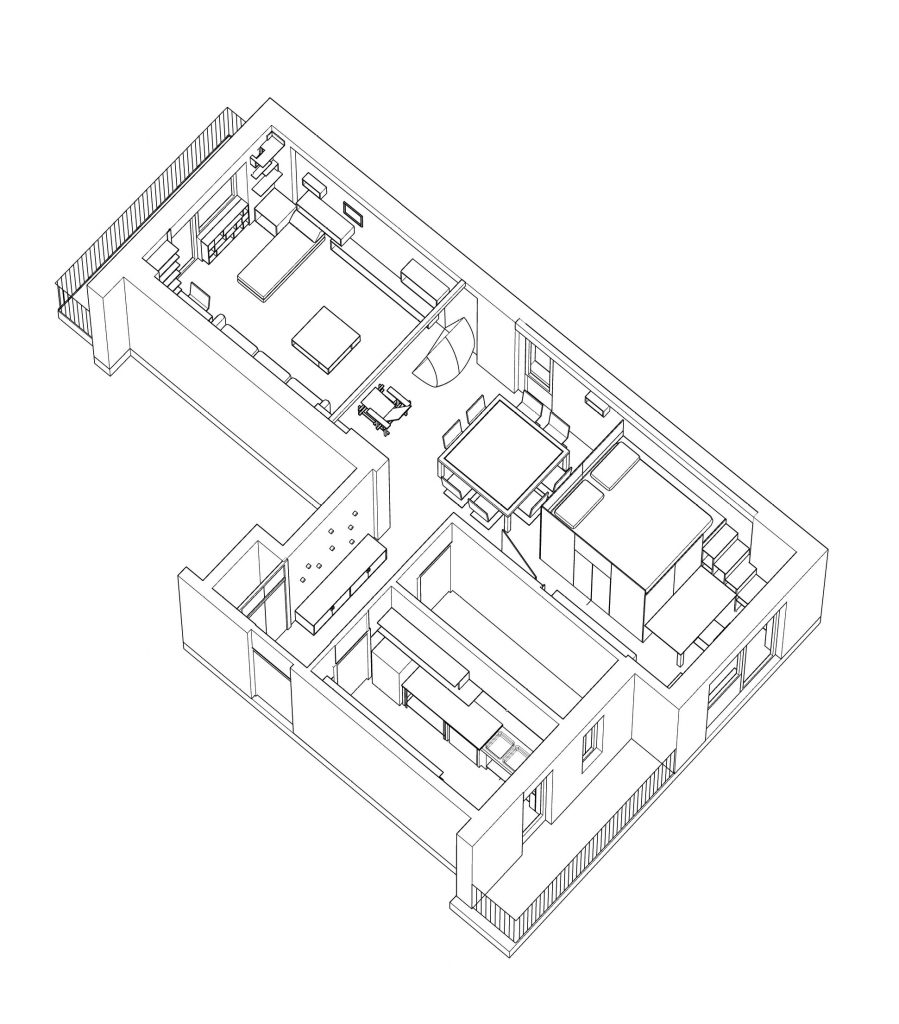
Profile
dr Matteo Fraschini
Architect
MSc(Arch) – Politecnico di Milano
Phd Architectural and Urban Design – Politecnico di Milano
mail@matteofraschini.com
Matteo Fraschini, Architect, PhD, and Adjunct Professor, is the winner of the international competition for Euroflora Genova 2025, where he served as Chief Architect for the development of the project and its installations, now showcased at the Venice Architecture Biennale 2025.
His practice focuses on architecture, landscape, urban design, and exhibition design, and has received awards and mentions in international competitions.
Recent work expands this research toward the design of landscapes and art installations, exploring the relationship between transparency, matter, light, and ground, and the dialogue between the visual and the tactile as spatial devices for narrative and perception.
Alongside professional work, Fraschini teaches architectural and urban design theory and studio at the Politecnico di Milano, where he is Adjunct Professor, and previously served as Senior Lecturer at the University of Cape Town, with research centered on design methods across the scales of the contemporary city.
As part of his academic and research activity, he is the author of Design/Disegno. Geometry, Measure and Algorithm for Architecture and the City (Maggioli, 2018) and co-founder of the online magazine Arc2Città.
CV


DesignDisegno
Book
Design/Disegno, Geometry Measure and Algorithm for architecture and the city
Year: 2018
Ed Maggioli
Abstract
In a design process, the drawing (disegno) of an object or a space is the act of representing that thing with the idea of knowing and modifying it, and it is surely an essential moment.
It is an operation that requires a synthesis capable of projecting and confronting on a two-dimensional surface – physical or virtual – the complexity of the world with an idea of form.
The concept of measure and measurement is therefore, for the designer, the instrument that makes it possible to make an object, architecture or a urban fact representable, abstract, knowable and therefore designable. Similarly, for the user of that space, the measurement will help to memorise, map and place him in relation to it.
Mathematics and geometry, particularly in Western architectural culture, have played a fundamental role in enabling this knowability. The machine of the two mirrors invented by Brunelleschi opened up the definition of the rules of perspective and performed the compression of a three-dimensional world regulated by numbers, on a two-dimensional surface. Thus, it allowed the definition of a bijective (one-to-one) relationship between the drawn and the real world. This operation reinforced the distinct role of the tactile and the visual dimension – the stage and the scene – and permitted to describe and graphically think of infinity and the infinitesimal.
Towards the end of the last century, Frank O. Gehry created his machine to “see and know” what he had manually modelled. He developed a digital tool that would help to study and refine, on a screen, the folds made on his cardboard models.
Mathematics as the element that structures (not always explicitly) the form, making it recognisable, for centuries has organised this invisible framework through discrete measures, proportions and modules. Now, the complexity of the contemporary built space, and not only of its most iconic architectures, seems to require a leap in the quality of the instruments that allow its readability and modifiability.
In the past, space was read and organised on the juxtaposition between the city and the countryside and on their peculiar measures. In the reality of urbanity today, the thresholds between the different parts that form it are rather describable as blurred surfaces readable through the concept of continuity and varying intensities. In this new dimension, the ground, as a thick modified and modifiable surface, maintains an essential role to organise a possible readability of a space that otherwise struggles to find its references.
These themes are addressed from a technical point of view, understood as the necessary knowledge to imagine and make an idea designable. Technique (téchne) therefore, must confront with the digital instrumentations where mathematics and measures are inflected as algorithm and modality of variation.
This book is a reflection that, with the benefit of practical examples, proposes to reason on the relationship between an idea and its representation, between a sketch, analogical and digital models, and on the “mental” tools which manage this relationship.
It is furthermore a reflection on the theoretical and practical implications of the concept of fold, or better, on the act of folding, as a concrete and tangible capture of the infinitesimal that directs a tectonic possibility. To do this, to try and control the infinitesimal as a measure that gives structure to contemporary design, a delving into mathematics as the algorithm that manages the machine, was necessary.
This publication is based on the doctoral dissertation in Urban and Architectural Design presented at the Politecnico of Milan and on the research and teaching activities developed by the author in that school and, subsequently, at the University of Cape Town.
_
Media
Presentation of Euroflora Genova 2025 – Porto Antico di Genova – 31th Jan. 2025
Euroflora Genova 2025 – Video for the Italian Pavilion at the Venice Architecture Biennale 2025

Download the Euroflora Genova 2025 design report
Selected Publications
Research Trajectory
The following publications give evidence of a research organized around some clear questions.
They are linked to the relationship between architecture, the city and its scales. They consider design, and its methods the node of the discussion.
Contemporary architectural design methods are therefore studied not only in relationship to (digital) tools but also, in a wider perspective, from a theoretical and cultural point of view. An essential part of the question is therefore related to the contemporary built environment, its fabrics, its infrastructures and its landscapes. Their morpho-typological characters, the tools to read and interpret them are considered necessary ingredients for a dissertation about contemporary design.
These topics have also been addressed in design competitions to clarify research questions and to “test” from a practical point of view a possible formal output.
The body of work consists of journal articles, conference proceedings, essays in books and monographs.
The book Design/Disegno aims at giving an organic overview of this research, which began with the Ph.D. Many of the publications reported here highlight the close connection between research activity and teaching experience.
_

- Fraschini, Matteo and Julian Raxworthy. “Territories Made by Measure: The Parametric as a Way of Teaching Urban Design Theory.” Architecture at the Age of Disruptive Technologies. Edited by Sherif Abdelmohsen, Tamer El-Khouly, Zaki Mallasi, and Amar Bennadji. The American University in Cairo. Cairo, Egypt: ASCAAD 2021, 2021. Link to Conf. Proc.

- Web article: Fraschini, Matteo. “Interview: Theory, Practice and Teaching.” Arcduecittà, 6 (2019): 12-15.

- Book (monograph): Fraschini, Matteo. Design Disegno – Geometry, Measure and Algorithm for Architecture and the City. Politecnica. Santarcangelo di Romagna (RN): Maggioli Editore, 2018. (Link)

- Chapter in a Book: Fraschini, Matteo. “Designing between Scales.” In Questo, Metropolitan Architecture, edited by Antonella Contin, Politecnica, 126-38. Santarcangelo di Romagna: Maggioli Editore, 2015. (Link)

- Fraschini, Matteo. “Match Boxes.” In The Adaptable City, Europan 12 Results, vol 12: Europan, 2014.

- Chapter in a Book: Fraschini, Matteo. “Experiments between Landscape and Urban Design in the Net City.” In Donana out of the City, edited by Antonella Contin, Matteo Fraschini, and Michele Moreno, 99-103. Santarcangelo di Romagna: Maggioli Editore, 2012. (Link)

- Book: Fraschini, Marco and Matteo Fraschini. Museo Cascina Ovi, Archivio Storico Di Segrate. Vol. [Museum and Exhibition Catalogue]. Segrate: Comune di Segrate, 2011.

- Journal Article: Fraschini, Matteo, Matteo Lo Prete, and Nicola Laurino. “Advanced Architectural Workshop: Implementing Structural Logics into a Design Process for Large Scale Lightweight Coverings.” Journal Of The International Association For Shell And Spatial Structures, no. 51 (2010): 137-46. (Link)

- Conference proceeding: Fraschini, Matteo, Matteo Lo Prete, P. Brivio, G. Femia, M. Macchi, and M. Tarini. Lightweight Structures Modeling through a Physical Simulation Software. Innovative Design and Construction Technologies. Edited by Ingrid Paoletti. Rimini: Maggioli, 2009. (Link)

- Chapter in a Book: Fraschini, Matteo and Carlos Dall’Asta. “Nyc Dock.” In edited by Giovanni Santamaria, 99-101. Florence: Alinea Editrice, 2007.

- Chapter in a Book: Fraschini, Matteo. “Aereo/Treno/Automobile: L’aerostazione Nodo a Differenti Scale.” In Milano_Malpensa. La Regione Urbana Nello Spazio Dei Flussi, edited by Ernesto d’Alfonso. Florence: Alinea Editrice, 2006.
- Chapter in a Book: Fraschini, Matteo, Chiara Donisi, and Marta Malini. “El Proyecto Como Metáfora Posible Para Una Nueva Conexiòn Entre Lugares.” In Segovia. Los Altos De Las Lastras, edited by Antonella Contin, 47-61. Milan: A&P Editing, 2004.
Web Articles:
- Fraschini, Matteo. “Contemporanee Figure Di Spazio Architettonico/Urbano (Http://Www.Arcduecitta.It/2012/07/Contemporanee-Figure-Di-Spazio-Architettonicheurbano-Di-Matteo-Fraschini/).” arcduecitta.it 2018, may (2010).
- Fraschini, Matteo. “Figure Abitate – Inhabited Figures (Http://Www.Arcduecitta.It/World/2011/07/Inhabited-Figures/).”
Fraschini, Matteo. “Identità E Riconoscibilità Nello Spazio Dei Flussi (Http://Www.Arcduecitta.It/2012/10/Identita-E-Riconoscibilita-Nello-Spazio-Dei-Flussi-Matteo-Fraschini/).” arcduecitta.it 2018, may (2011). - Fraschini, Matteo. “Riferimenti Figure Pattern. (Http://Www.Arcduecitta.It/2013/02/Riferimenti-Figure-Pattern-Matteo-Fraschini/).” arcduecitta.it 2018, may (2012).
- Fraschini, Matteo. “Cairo Ard Al-Liwa. New Centrality. A Model of Mslab Teaching Activity between Consolidated Research Lines and Further Openings. (Http://Www.Arcduecitta.It/World/Cairo-Ard-Al-Liwa-New-Centrality-a-Model-of-Mslab-Teaching-Activity-between-Consolidated-Research-Lines-and-Further-Openings-Matteo-Fraschini/).” arcduecitta.it (2013):